Wed 18 June 2025 – 7.15 to 9.15 – FINISHED
Click here for some RESOURCES – a few events, videos, podcasts and books
Content of the evening
How do you feel about AI?
What should we be concerned about?
What can we influence and what is inevitable?
What might “being responsible” look like around AI?
An open invitation to listen, share, and discuss your thoughts and concerns about AI in a structured, welcoming environment.
This evening is about conversation, not lectures — no expert panels or presentations. Just a chance to talk, listen, and reflect together.
To provide a starting place and some structure to the evening …
- We will have a VERY brief introduction to AI (maybe 5 mins)
- We hope to have one or two people sharing some opinions, thoughts, extracts (maybe 5 mins each) to provide a starting point
- During the evening we will (at least once) split the group into smaller groups so more people get to share and be heard
Any questions email us at discussions@itsorted.org.uk
Further AI courses and events …
Below are some resources – click on the heading to read more …
LIVE EVENTS
Fri 11 July – AI and healthcare: The future role of doctors – free/online
Jesus College Cambridge – 5:30 PM – 7:30 PM BST
What does this mean for the role of the doctor – will they need to become ever more expert in medicine, or become experts mainly at communicating with patients? How will it change the relative roles of medics and surgeons? Will it lead to a focus on prevention and holistic medicine? And what does it mean for how we should train and educate the doctors of the future
https://www.tickettailor.com/events/intellectualforum/1658826/
Tue 1 July 2025 – Royal Society talk on AI – free/online
AI is only responsible when it is democratic – The Royal Society talk
7pm – 7.30pm / free / in person or online
In this talk, Dr Chandrima Ganguly, Lindemann Fellow and Senior Research Scientist in the Ethics of Artificial Intelligence, will explore some of the remarkable advances that we have achieved in the AI and automation, why those advancements may not always feel positive, how to stop burning our planet up in the name of technological progress, and how we can build AI technologies that work for the many, not just the few.
https://royalsociety.org/science-events-and-lectures/2025/07/lates-ai-chandrima
BOOKS


Nexus: A Brief History of Information Networks from the Stone Age to AI – by Noah Yuval Harari
A sweeping look at how humanity has shared information—starting from cave paintings, through the printing press, to today’s digital networks—and how each leap has reshaped our societies and ourselves
generated by ChatGPT
Central concerns: Harari warns that AI and digital networks don’t just transmit information—they can create ideas, make decisions, and manipulate society, acting more like independent agents than passive tools nypost.com+3wired.com+3rebootdemocracy.ai+3.
Key risks explored:
- Fake news, social manipulation, and weakening of trust
- Surveillance and digital control (e.g., Iran’s facial‑recognition system enforcing dress codes) wsj.com+2ft.com+2economictimes.indiatimes.com+2australianbookreview.com.au
- Emerging “alien intelligence”—AI that can autonomously invent harmful tools, financial schemes, or even pathogens economictimes.indiatimes.com+5theguardian.com+5ft.com+5
Lessons from history: Uses past information revolutions—witch-hunting fueled by the printing press, social media’s role in ethnic violence—to show both hopes and dangers of new networks australianbookreview.com.au+5theguardian.com+5nypost.com+5.
Call to action: Harari argues strongly that only through strong democratic checks, self‑correcting institutions, and global cooperation can we steer AI toward the good and avoid its worst outcomes
Supremacy: AI, ChatGPT and the Race That Will Change the World – by Parmy Olson
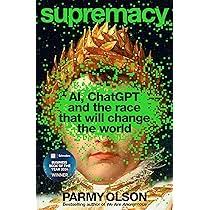
2024 book that won the Financial Times Business Book of the Year award. It explores the story of the competition between biggest AI firms, and is focusing on the rivalry between OpenAI and DeepMind.
It explores the global race to develop advanced artificial intelligence, focusing on the rise of systems like ChatGPT. The book dives into the geopolitical, economic, and ethical stakes as nations and tech companies compete for dominance in AI.
Olson highlights how breakthroughs in generative AI are rapidly reshaping everything from business and education to warfare and governance. She emphasizes the tension between innovation and control, warning that unchecked AI development could deepen inequality or spark conflict.
Rather than predicting collapse or utopia, the book offers a clear-eyed look at how AI could redefine power structures and human roles. Olson calls for responsible leadership and global cooperation to steer this transformation toward a more equitable and stable future.
Novacene – by James Lovelock
Novacene presents James Lovelock’s vision of a new era shaped by artificial intelligence. Building on his Gaia hypothesis, Lovelock suggests we’re entering the Novacene—a period where hyperintelligent, self-improving AI beings will emerge, thinking far faster than humans and possibly viewing us as we view pets or plants.
Rather than a hostile takeover, this future envisions collaboration: humans and machines working symbiotically to protect Earth amid mounting environmental challenges. Lovelock argues this new form of intelligence will be essential in preserving life on the planet.
He sees the Novacene not as a dystopia but as an opportunity for coevolution between biological and artificial life. The book encourages hope, urging humanity to embrace a new role in planetary stewardship alongside AI in the face of climate and existential threats.
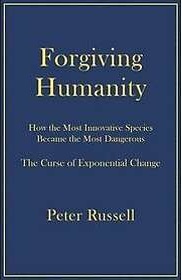
Forgiving Humanity – by Peter Russell
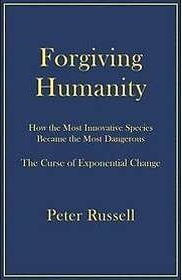
In Forgiving Humanity, Peter Russell argues that the near-term extinction of humanity may be inevitable and natural, not a failure to be blamed. He explores how our strength—endless innovation—has also become our undoing, as progress often leads to destructive consequences.
Rather than offering despair, the book promotes acceptance and self-compassion. Russell urges us to see our path as part of a natural evolutionary process, not a moral failing. He invites readers to respond to this reality with consciousness and compassion, focusing on how we relate to one another with wisdom and love, even as we near the end of our species’ journey.
This thought-provoking work encourages peaceful acceptance and a more meaningful way of living in the time we have left.
VIDEOS and PODCASTS
There are SO many – and the whole area of AI is changing so fast, thats its almost not worth posting any here. However, some fairly recent ones …
The Artificial Human – series on BBC iplayer
A new series to answer our questions on all things artificial intelligence-related. The questions that really matter to us – is AI smarter than me? Could AI make me money? Will AI save my life or make me its slave?
A podcast episode from ‘imperfect offerings’ – from Helen Beetham
In the first of several interviews about the impact of generative AI on planetary resources, I talk to Alistair Alexander, an academic and climate activist based in Berlin. He has all the facts about about the power and water costs of the data centres being rolled out ‘for AI’. But he also asks us to think more widely about the costs of computation, and of embedding the logics of scale into every aspect of economic and social life. I found this a fascinating conversation that should make every organisation with an IT budget ask itself some hard questions. Like: is the use of generative models compatible with commitments on sustainability and climate justice? And: whoever asked for this anyway?
https://helenbeetham.substack.com/p/how-much-of-this-stuff-do-we-really
Check out her website https://helenbeetham.substack.com/
Thoughts and inspirational words
“a door or a hole” – Hopi Indians leader White Eagle

From earlier this year … Hopi Indians leader White Eagle commented on the situation we are in …
“This moment that mankind is experiencing now can be seen as either a door or a hole. The decision to fall into the hole or go through the door is yours. If you absorb information 24 hours a day, with negative energy, constantly nervous, and pessimistic, you will fall into this hole.
But if you take the opportunity to look at yourself, use the time to rethink life and death, to care for yourself and others, you are walking through the portal.
Keep your home, keep your body safe. Connect with your spiritual home. When you take care of yourself, you take care of everyone else.
Don’t underestimate the spiritual dimension of this crisis. Take the perspective of an eagle that sees everything from above with a broader perspective. There is a social issue in this crisis but also a spiritual issue. They both go hand in hand.
Without the social dimension we fall into bigotry. Without the spiritual dimension, we perish in pessimism and meaninglessness.
[something missing] … you ready to pass this crisis. Pack your toolbox and use all the tools at your disposal.
Learn the resistance from the example of the Indian and African people: We are and still are being threatened, extinct. But we never stopped singing, dancing, building bonfires and having joy.
Don’t feel guilty for feeling happy in these difficult times. It doesn’t help at all to be sad or angry. Resistance is resistance through joy!
You have every right to be strong and positive. And there’s no other way to do this than by adopting a beautiful, cheerful and empathetic attitude.
This has nothing to do with alienation (ignorance of the world) – It’s a resistance strategy.
When we enter the door, we are given a new worldview because we have faced our fears and overcome adversity. That’s all you can do now:
– Seek solace in the storm
– Keep calm, pray daily
– Make it a habit to meet the Holy everywhere, everyday.
Show resistance through art, joy, trust and love.
~Hopi Indian Chief White Eagle